
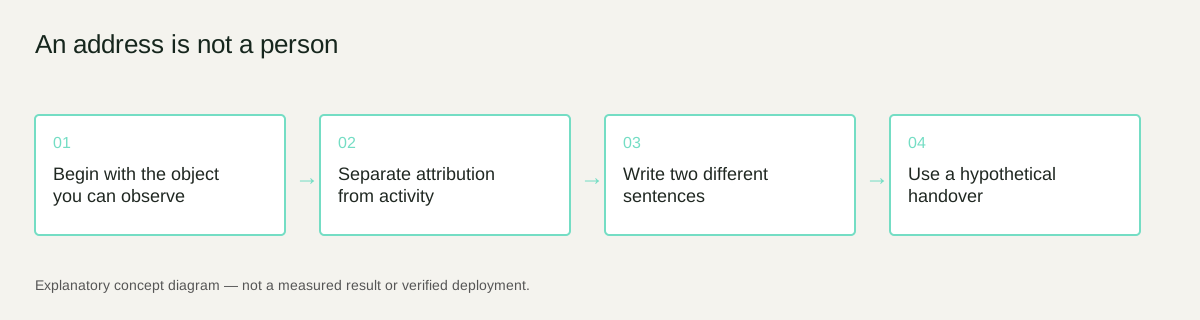
Begin with the object you can observe
An address is a technical identifier within a network context. Treating it as a complete identity creates avoidable errors in research. A reader needs to know which network is being examined, which observation is available and what additional evidence would connect that observation to a person, organisation or automated system.
Separate attribution from activity
A block explorer can expose information about transactions, blocks and accounts. Its labels and presentation are an additional layer, not a substitute for examining the underlying record. The Ethereum block-explorer guide describes the kinds of information explorers present. Researchers still need to evaluate a specific label’s origin before relying on it. [C03]
Write two different sentences
“This address appears in the transaction” and “this company performed the action” have different evidential requirements. The first may be supported by the referenced record. The second needs attribution evidence and context about control at the relevant time. If an announcement supplies the attribution, identify it as an announcement rather than silently upgrading it to independent confirmation.
Use a hypothetical handover
Suppose an account is operated by one team during a trial and another after a service change. This example illustrates why a present-day label cannot automatically explain an older action. Record observation dates, source dates and any stated control changes separately. Do not invent a handover date merely because a transaction pattern changed.
Keep the boundary visible
A useful research note states what was observed, how attribution was obtained and what remains unresolved. Link the exact record where practical, explain any missing context and avoid putting personal allegations into a technical address label. Identity conclusions should remain proportional to the evidence.
Sources
- Ethereum accounts — Account types and transaction authority; not product assurance.
- Block explorers — Explorer information; attribution needs separate evidence.
Sources and further reading
- Ethereum accounts ↗
Account types and transaction authority; not product assurance
- Block explorers ↗
Explorer information; attribution needs separate evidence
Check the original document for its scope, date and current status.
Something needs a closer look?
Suggest a correction